We are not interested in objects that look finished on the day they leave the yard.
Monolith is a materials-first studio: every commission begins with a material, not a drawing. We work slowly, in small batches, with a research programme running underneath the commissions that lets us say honestly what a surface will do in five, fifteen and fifty years.
How a piece is made
Five stages, rarely fewer than four months.
01
Source Weeks 1–3
Every commission begins at the quarry, foundry, or clay pit. We select material in person — grain, vein and flaw are chosen, not specified on a sheet.
Site visitMaterial selectionTest blocks
02
Study Weeks 2–6
Full-scale drawings and physical maquettes, often in a cheaper stand-in material, before the real block is touched.
1:1 maquetteLoad studiesClient review
03
Rough form Weeks 4–10
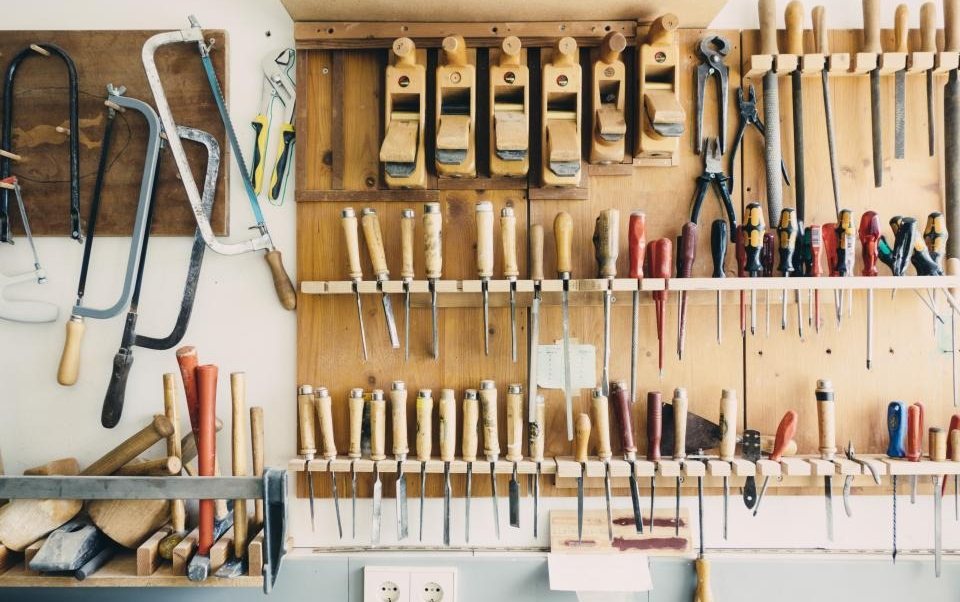
Material is roughed to within a few centimetres of its final form — by hand, by CNC, or both, depending on what the piece asks for.
Hand tools5-axis CNCCast & mould
04
Refine Weeks 8–14
The slow part. Hand-finishing, grinding, and in some cases years of intentional weathering before a surface is called finished.
Hand finishingPatina controlTolerance check
05
Install Days, on site
Our own crew delivers and sets every major work — no third-party riggers who have never lifted the piece before.
Own crewRigging planSite protection
Materials research
The library.
Every material that enters the studio is logged, tested and left outside to weather before it is trusted with a commission. Eight are in active use; three more are currently on trial.
cast 03 — sealedCast concrete
core sampleQuarried basalt
patina, 8moCast iron
glaze trial 12Stoneware ceramic
weather, 6moCorten steel
tumbled edgeQuarried limestone
wax finishCast bronze
rift-sawnWhite oak
What we hold to
Four rules.
01 · No sealants that lieIf a surface will weather, we let it weather. Sealants that promise a material will never change are, in our experience, promising something untrue.◆
02 · The maquette is not optionalEvery commission gets a full-scale physical study before the real material is touched, no matter how confident the drawing looks.◆
03 · One fabricator, start to finishThe person who roughs a form is the person who finishes it. We do not hand pieces between specialists mid-way.◆
04 · Test blocks outlive the projectEvery test block and offcut is catalogued and kept. The library is now larger than most years' worth of finished work.◆
People
Who does the work.
Anneke VossFounder & PrincipalTrained as a stonemason before founding Monolith in 2011; still cuts the first block on every major commission herself.
Dashiell OrtuStudio DirectorOversees production scheduling, client commissions, and the studio's fabrication partners across three countries.
Mireille KasprzakMaster FabricatorTwenty-two years at the bench. Runs the cast-iron and bronze programme and trains every apprentice who comes through the door.
Tomas ReykMaterials ResearcherA background in mineralogy. Spends most of his time in the materials library, testing how surfaces weather over decades, not months.
Priya NakamuraRegistrar & ArchiveKeeps the catalogue, the edition records and the loan paperwork. If a work has ever left the building, she can tell you where it went.
Recognition
Awards & fellowships.
2025Designer of the Year — Sculptural DesignDezeen Awards
2024Design Award — Object of the Year, Threshold IWallpaper*
2023Visiting Fellowship — Anneke VossRoyal College of Art
2022Editors Award — Best Use of MaterialLondon Design Festival
2019Rome Scholarship in Design — Anneke VossBritish School at Rome
2016Jury Prize, Young Sculptors BiennialVenice
History
Fifteen years, six turns.
2011
A yard on the Rainham marshes
Monolith begins as a single rented bay in a disused stone works on the Thames marshes, cutting architectural stone for other people's buildings.
2014
The first cast
Anneke pours the studio's first concrete edition, Threshold (Study), after a winter spent failing to stop the pours from cracking.
2017
Cast iron enters the studio
A foundry partnership in Sheffield lets Monolith bring iron and bronze into the practice for the first time.
2020
The materials library
What began as a shelf of test tiles becomes a formal research programme: every surface treatment logged, dated, and left outside to weather.
2023
Ground Truth
A ten-year survey exhibition travels to three venues and becomes the studio's first true retrospective.
2026
Weathering
New work in steel and stone opens at Hoxton Project Space, the studio's first solo exhibition in central London.
Come see the yard.
Rainham, east London. Bring boots — the yard floor is gravel and occasionally wet concrete.