I spent four years working front of house before I worked in design, and the single most useful thing restaurants taught me is that a table setting is not decoration. It is a set of instructions. Every object on the cloth is telling the person sitting down what kind of evening this is going to be, how long it will last, and whether they are allowed to relax.
Most advice about setting a table is written for the two nights a year when you have guests you want to impress. This is not that. These are the rules we use for the other three hundred and sixty-three, tested in our own kitchens, and biased heavily toward the tables that get set again the next night without anyone dreading it.
Six rules worth keeping
One. Put the water on the table before anything else. A carafe and glasses at the centre does more for the feel of a table than any centrepiece, and it removes the single most common interruption of a meal — someone getting up for water. We designed our carafe at 1.1 litres for exactly this: enough for four people through a long dinner, light enough to pass across the table one-handed.
Two. Nothing on the table should be precious. If a single object makes you nervous when a child reaches across, the table is not working. Precious things belong on a shelf where you can look at them without negotiating.
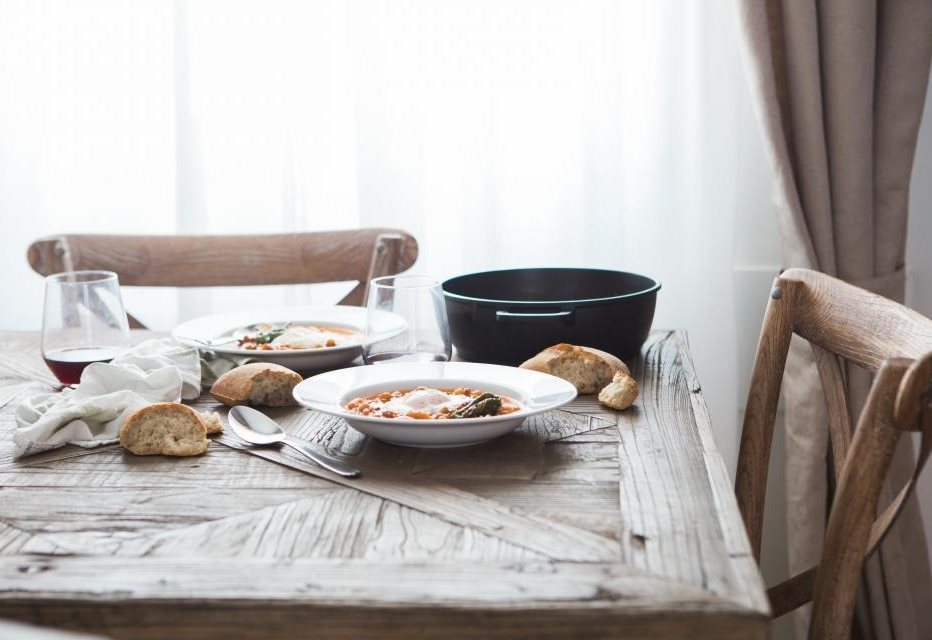
Three. Cloth beats no cloth, and linen beats cotton. Not for elegance — for acoustics. A bare wooden table amplifies every plate and glass. A linen runner or a set of napkins under the serving pieces takes the clatter out of a room, and you notice the difference in how long people stay seated.
Four. Serve from one vessel, not four. One large bowl in the middle reads as generosity. Four small matching dishes read as a performance, and they cool faster. Our serving bowl is 28cm across for this reason — it is deliberately slightly too large for a family of four, because the point is that it looks like there is enough.
Five. Light low and warm, never overhead. An overhead fixture points down at the top of everyone's head and puts their eyes in shadow. A lamp on a sideboard or a pair of candlesticks on the table itself lights faces from the side, which is the only lighting anyone has ever looked good under. If you take one thing from this list, take this one.
Six. Set it the night before if you can. Ninety seconds after the dishwasher is emptied, while you are already standing there. A table that is already set is the cheapest possible way to make the next evening feel considered, and it removes the decision entirely.
The rule we ignore
Restaurants match. Every plate is the same plate, every glass the same glass, and there is a real logic to it — a matched setting is quiet, and quiet is what you want when the food is the event.
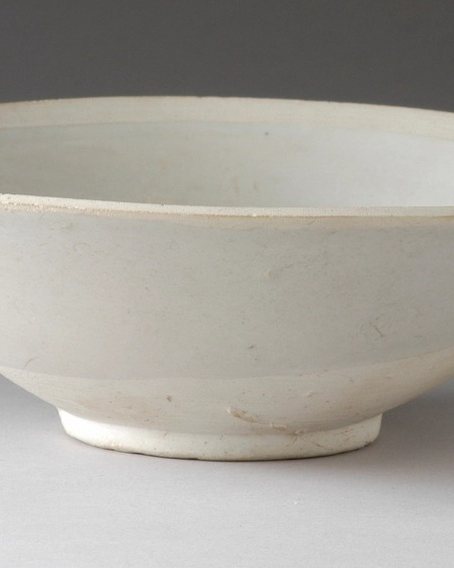
We ignore it completely at home. Our own tables are two generations of stoneware, a set of glasses bought in three separate years, and one bowl with a chip in the rim that has outlived four things bought to replace it. A table that has accumulated is a table that tells you people have been eating at it for a long time, and that is a better instruction to give a guest than anything a matched set can say.